Quick Guide to Safe Hazardous Waste Disposal at Home
Hazardous waste at home is one of those subjects most people only think about when there's a half-used can of paint, a leaky battery, or a bottle of strong cleaner sitting under the sink. Then the question becomes urgent: what do you actually do with it, safely and legally, without making a mess or creating risk?
This quick guide to safe hazardous waste disposal at home breaks the process down into clear, practical steps. You'll learn how to identify common household hazardous materials, how to store and separate them, what not to mix, and when it makes sense to use a professional collection service. If you want a simple, no-nonsense way to protect your home, your family, and the environment, you're in the right place.
Where disposal gets complicated, it usually pays to choose the safer route rather than the fastest one. A bit of care now avoids a bigger problem later.
Why Safe Hazardous Waste Disposal at Home Matters
Hazardous household waste can cause harm long before it becomes visibly dangerous. A cracked aerosol can may release fumes. A loose battery can leak corrosive material. Old paint, solvents, cleaning chemicals, pesticides, and fluorescent tubes can all create problems if they are stored badly, tipped into a normal bin, or mixed with the wrong substances.
The main issue is that many everyday items become hazardous once they are damaged, expired, or partially used. They may be flammable, toxic, corrosive, or reactive. That means they can injure people, damage property, and contaminate recycling or general waste streams.
There's also a practical angle. If you dispose of hazardous items correctly the first time, you reduce clutter, avoid smells and leaks, and stop the awkward "what on earth do I do with this?" pile from growing in the garage or shed. We have all seen that pile. It rarely sorts itself out.
For larger clear-outs, the rest of the waste stream matters too. If your home project includes non-hazardous bulky items alongside the dangerous stuff, services such as home clearance or garage clearance can help you separate the safe loads from the items that need specialist handling.
How Safe Hazardous Waste Disposal at Home Works
The basic process is straightforward, even if the items themselves are not.
- Identify the waste. Check labels, containers, and condition. Look for warnings such as flammable, toxic, corrosive, oxidising, or irritant.
- Separate hazardous from non-hazardous waste. Do not lump everything together just because it is "old stuff". Separation is the first safety step.
- Keep items in their original containers where possible. The label tells you what it is and how it should be handled.
- Store safely until disposal. Use a cool, dry, well-ventilated place away from heat, pets, children, and food.
- Choose the right disposal route. Council drop-off points, specialist collections, retailer take-back schemes, or a licensed waste carrier may all be appropriate depending on the item.
- Transfer it correctly. Transport containers upright, secure them so they cannot tip, and never carry incompatible chemicals together if a leak could cause a reaction.
At home, the biggest mistakes happen in the storage stage. People decant unknown chemicals into old bottles, mix half-empty products in a "one last bottle" effort, or place batteries loose in a drawer. Those shortcuts create avoidable risk. A cleaner, safer process is usually simpler than people expect.
Key Benefits and Practical Advantages
Safe disposal is not just about avoiding accidents. It also improves how your whole home is managed.
- Reduces fire risk: flammable liquids, aerosols, and batteries can become dangerous if stored badly.
- Protects health: chemical spills and fumes can irritate skin, eyes, and airways.
- Prevents contamination: hazardous waste can ruin recycling loads and contaminate ordinary rubbish.
- Saves time later: once items are sorted and labelled, they are far easier to remove in one go.
- Supports responsible recycling: some items, especially batteries and white goods, may contain recoverable materials.
- Improves household organisation: cupboards, sheds, lofts, and garages become easier to use when old hazardous items are dealt with.
There is also a quiet financial benefit. Preventing a spill, smoke event, or accidental breakage is almost always cheaper than dealing with damage. That is especially true in flats, where one badly stored container can create problems for neighbours as well as for you.
If the waste includes an appliance or old storage unit that is blocking access to other items, it may be worth pairing hazardous sorting with a broader removal plan using large item collection or rubbish removal.
Who This Is For and When It Makes Sense
This guide is useful for anyone who stores, uses, or clears out common household products. In practice, that means nearly everyone.
It is especially relevant if you are:
- decluttering a kitchen, shed, loft, or garage
- moving home and finding old chemicals or batteries
- renovating and dealing with paint, adhesives, or solvents
- replacing appliances such as fridges or freezers
- sorting garden products like weed killers or patio cleaners
- looking after a family home where children or pets are around
- managing a property after a tenancy or long-term storage period
It also makes sense if you are responsible for a property and want a reliable disposal routine rather than a last-minute clean-up. For example, a landlord or letting agent clearing out a flat may face a mix of expired cleaning products, old batteries, and broken small appliances. That is usually a job for careful sorting first, and a planned removal second.
When the job grows beyond a kitchen-cupboard tidy, a broader service like flat clearance or house clearance can be a sensible next step, especially if you want the non-hazardous material removed in the same visit.
Step-by-Step Guidance
1. Identify what you have
Start by gathering questionable items into one area and reading the labels carefully. Common household hazardous waste includes paint, varnish, glue, solvent-based cleaners, bleach, drain cleaner, pesticides, weed killer, batteries, fluorescent tubes, electronic waste, fuels, and some beauty or hobby products.
If a container is unlabelled, damaged, or leaking, treat it with extra caution. Do not sniff it, tip it out, or transfer it into a random bottle. That is how confusion turns into a hazard.
2. Check whether it can be returned, reused, or recycled
Some items do not need "disposal" in the usual sense. Unused paint may sometimes be accepted through community reuse schemes or special collection points. Batteries are often collected separately. Electrical items may be recyclable through designated channels. Old fridges and white goods are usually handled through specialist routes rather than ordinary waste.
For white goods, it is usually best to use a dedicated route such as white goods recycle or a specific appliance removal option like fridge disposal.
3. Keep incompatible items apart
This is one of the most important rules. Never store acids with bleach. Never place fuels near heat sources. Never mix chemicals just because they are going to the same disposal point. "Same destination" does not mean "same container".
Use separate boxes or tubs for different categories: batteries, liquids, aerosols, paint, electricals, and sharps if applicable. A simple label on each container saves a lot of confusion later.
4. Seal, secure, and stabilise
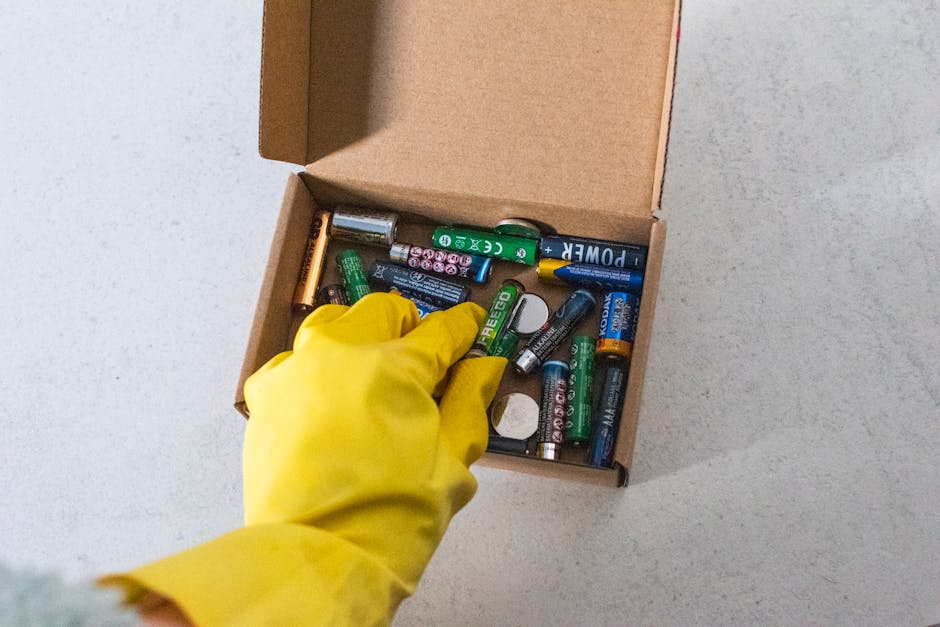
Make sure lids are tight, containers are upright, and any fragile items are cushioned so they cannot smash together. If you have a box of batteries, tape exposed terminals where appropriate and store them in a dry container. If you are handling glass tubes or broken items, use rigid packaging so they are less likely to break again.
5. Store in a safe place until collection day
A cool, dry, ventilated place away from direct sunlight is usually the best temporary storage. Keep the area away from food, drink, and children's reach. If there is any smell, dampness, or sign of leakage, don't leave it sitting there for weeks. Prioritise disposal sooner rather than later.
6. Choose the right disposal route
Your options may include:
- council hazardous waste or household waste services where available
- retailer take-back schemes for certain items
- designated recycling facilities
- licensed private waste collection services
For mixed loads, a professional waste company can often save time and reduce handling risk. If you need to compare service options, pricing and quotes is a useful place to start, while contact us is the most direct route if you need practical advice about a specific load.
7. Clean the area after removal
Once the waste is gone, wipe down the storage area carefully. Use only appropriate cleaning methods for the material involved. If a spill has happened, do not rush. Contain it, ventilate the space, and get help if you are unsure what the product was or whether it is reactive.
Expert Tips for Better Results
Good hazardous waste disposal is mostly about calm, methodical habits. A few small practices make a big difference.
- Keep original labels intact: if the label is faded, photograph it before it gets worse.
- Bundle by category, not by room: batteries from the kitchen and batteries from the shed should go in the same battery box.
- Use a single staging area: this reduces the chance of forgetting a leak-prone item in another cupboard.
- Make a quick inventory: even a handwritten list helps when you are speaking to a council depot or a waste carrier.
- Do not overfill containers: leave enough space to close lids properly and avoid crushing fragile items.
- Check dates where relevant: old chemicals, fuel cans, and batteries can degrade over time.
If you are clearing multiple rooms, build the hazardous sorting into the wider clean-up rather than leaving it for last. That way the odd, awkward items do not get left in a half-finished pile for six months. Truth be told, those piles become part of the furniture if you let them.
For bigger mixed-household projects, it may be helpful to combine hazardous sorting with waste clearance or waste removal so the safe and unsafe items are dealt with in a structured way.
Common Mistakes to Avoid
Most household incidents come from a handful of predictable mistakes. Avoid these and you are already ahead of the curve.
- Putting hazardous waste in general rubbish: this can expose waste handlers, collection crews, and your household to risk.
- Pouring liquids down sinks or drains: this can damage pipes and contaminate water systems.
- Mixing products together: bleach and ammonia is a classic example of a dangerous combination, but many other mixtures are also unsafe.
- Storing batteries loose: terminals can short-circuit if they touch metal.
- Keeping damaged containers indoors for too long: even "just a little leak" can become a bigger problem.
- Decanting into unlabelled bottles: future-you will not thank present-you for that one.
- Ignoring local guidance: councils and disposal points often have specific acceptance rules.
A common grey area is old paint. People often assume all paint should be binned or all paint can be recycled. In reality, the correct route depends on the type, condition, and local service. The safest answer is usually to check before moving it anywhere.
Tools, Resources and Recommendations
You do not need specialist equipment for most household hazardous waste, but a few items make the job safer and neater.
| Item | Why it helps | Best use |
|---|---|---|
| Gloves | Protects hands from residue and minor leaks | Handling containers, batteries, and dusty items |
| Rigid boxes or tubs | Keeps items upright and separated | Transporting bottles, tubes, and small electricals |
| Strong tape | Secures lids and loose battery terminals | Temporary containment and transport prep |
| Marker pen | Helps label contents clearly | Sorting and staging waste categories |
| Absorbent material | Reduces spread if a minor leak occurs | Short-term spill control around containers |
| Inventory list | Makes collection and drop-off easier | Council, depot, or carrier handover |
Useful resources include your local council collection guidance, retailer take-back options, and licensed waste removal support. If your concern is broader than one or two items, a service such as bulk waste collection can be a practical fit for the non-hazardous part of the load, while the hazardous items are handled separately.
If you want reassurance about how waste is handled, the company pages on health and safety policy, insurance and safety, and recycling and sustainability are worth reviewing. They help you understand the standards behind a responsible collection process.
Law, Compliance, Standards, or Best Practice
For householders, the exact rules can vary by council and by waste type, so it is sensible to check local guidance before arranging disposal. In the UK, the broad best-practice principle is simple: do not place hazardous items in general household waste unless the product guidance or local authority specifically says it is safe to do so.
Where waste is collected by a third party, use a licensed and insured operator that handles materials responsibly. Keep records or notes of what you have handed over if the load is unusual or contains multiple categories. That is not overkill; it is good household housekeeping.
If you are unsure whether something counts as hazardous, err on the side of caution. Product labels, safety data sheets, and council guidance can help. For anything strongly toxic, flammable, pressurised, or leaking, professional advice is the safer option.
Also check the service terms where relevant. Pages like terms and conditions and payment and security are useful if you are booking a collection and want to understand the process before confirming.
Options and Comparison Table
Choosing the right disposal route depends on the type of waste, the amount, and how quickly you need it gone.
| Disposal option | Best for | Pros | Watch-outs |
|---|---|---|---|
| Local council service | Small household quantities | Often low-cost and familiar | May have limited dates, item rules, or booking requirements |
| Retailer take-back | Batteries, small electricals, certain products | Convenient for specific items | Not available for everything |
| Designated recycling point | Sorted items and recyclables | Clear separation and proper treatment | Requires transport and preparation |
| Licensed private collection | Mixed loads, bulky waste, urgent clear-outs | Fast, flexible, less handling by you | Costs more than a basic drop-off route |
For most homes, the best option is a combination: separate the hazardous materials carefully, then use the most appropriate route for each category. If the rest of the room is full of unwanted furniture, broken appliances, or general clutter, you may want to pair the hazardous work with furniture disposal or home clearance.
Case Study or Real-World Example
Imagine a family clearing out a garage after years of postponed jobs. They find old emulsion paint, a tin of wood preservative, half-used patio cleaner, a box of loose batteries, and a cracked aerosol can. Alongside that are a broken shelf, a rusted bicycle, and several bags of general clutter.
The smart approach is not to empty everything into one pile. Instead, they sort the hazardous items first:
- paint tins with readable labels are kept upright and separate
- the cracked aerosol is isolated so it cannot be punctured or heated
- the batteries are gathered into a dry plastic container
- the patio cleaner is sealed and stored away from other liquids
Then they remove the clutter in a second stage, using a broader clearance option for the non-hazardous items. That approach reduces handling, keeps chemicals apart, and makes the final disposal far easier. It also turns a stressful weekend job into a manageable one.
That is the real value of a good system: not perfection, just fewer moving parts and fewer opportunities for things to go wrong.
Practical Checklist
Use this checklist before you move any hazardous household waste.
- Have I identified each item and read the label?
- Have I separated hazardous waste from normal rubbish?
- Are incompatible products stored apart?
- Are lids sealed and containers upright?
- Have I kept batteries, liquids, aerosols, and electricals separate?
- Is the storage area cool, dry, and away from children or pets?
- Do I know the correct disposal route for each category?
- Have I avoided pouring anything into sinks or drains?
- Have I checked whether the item can be returned, reused, or recycled?
- Do I need help from a licensed collection service for a mixed or bulky load?
One practical tip: if you are already working through a room, take five minutes at the end to photograph any items you are unsure about. That gives you a record for later and stops one odd container from holding up the whole job.
Conclusion
Safe hazardous waste disposal at home is mostly about slow, sensible decisions. Identify the item, keep it separate, store it safely, and choose the right route for disposal. If you do those four things well, you will avoid most of the common problems householders face.
The payoff is real: less risk, less clutter, better recycling outcomes, and a home that feels more under control. And if your clear-out includes a mix of hazardous items and bulky unwanted waste, it is often easier to split the job and have the non-hazardous material removed professionally while the dangerous items follow the correct specialist route.
Get a free quote today and see how much you can save.
If you are ready to clear items safely and without guesswork, use a trusted waste service that can guide you through the next step and handle the load responsibly.
Frequently Asked Questions
What counts as hazardous waste in a home?
Common examples include batteries, paint, solvents, aerosols, bleach, drain cleaner, pesticides, fuel, fluorescent tubes, and some electronic waste. If a product is labelled flammable, toxic, corrosive, oxidising, or harmful, treat it as hazardous unless you have confirmed otherwise.
Can I put hazardous waste in my normal bin?
Usually no. General household bins are not designed for hazardous materials, and doing this can create risks for waste handlers and the environment. Check local council guidance or the product instructions before disposing of anything unusual.
How should I store hazardous waste before collection?
Keep it in its original container where possible, seal lids properly, and store items upright in a cool, dry, ventilated place away from children, pets, food, and heat sources. Separate incompatible products and avoid stacking fragile containers.
What should I do if a container is leaking?
Do not ignore it. Move it only if it is safe to do so, place it inside a larger rigid container if appropriate, and keep it away from heat and other chemicals. If you are unsure what the substance is, seek professional advice rather than trying to decant it.
Can old batteries go in the recycling bin?
Not usually in household recycling unless your local authority specifically allows it. Many batteries need separate collection because they can short-circuit or leak. Tape exposed terminals if relevant and store them dry until you can take them to the correct point.
How do I dispose of old paint safely?
First check whether the paint is water-based or solvent-based and whether it is still usable. Some paint can be accepted through designated collection or reuse routes, while other tins need specialist disposal. Never pour paint down drains or into the soil.
Are aerosols dangerous even when they look empty?
Yes, they can be. "Empty" aerosols can still contain pressure or residue. Do not puncture, crush, or heat them. Store them safely and use the correct collection route for pressurised containers.
What is the safest way to move hazardous waste in a car?
Transport items upright, secured so they cannot tip, and kept apart from food, passengers, and incompatible materials. Open the windows if there is any smell or concern about fumes. If the load is large, leaking, or uncertain, do not transport it yourself.
Can I mix similar chemicals together to save space?
No. Even products that look similar can react in unexpected ways. Keep chemicals in separate containers and do not mix them just because they have the same disposal destination.
Do councils collect hazardous household waste?
Some do, but the service, booking rules, and accepted items vary. It is best to check your local council directly for current guidance rather than assuming a general rubbish collection will take hazardous items.
When should I use a professional waste removal service?
Use a professional service when the load is mixed, bulky, urgent, leaking, or awkward to move safely. A licensed operator is also a good option if you have a garage, loft, or whole-room clear-out and want the non-hazardous waste removed in the same visit.
What if I'm not sure whether an item is hazardous?
Treat it cautiously until you confirm what it is. Look for labels, instructions, or product codes, and if you still cannot identify it, separate it from the rest and ask for advice. Uncertainty is a signal to slow down, not guess.
Does hazardous waste disposal cost more?
It can, depending on the item, quantity, and collection method. Small quantities may be cheap or even accepted through council or retailer routes, while mixed or bulky loads are usually priced differently. If you need a precise figure, request a quote before booking.
Can hazardous waste be recycled?
Some of it can, yes. Batteries, white goods, certain electricals, and some packaging or metal components may be recoverable through the correct route. But recycling only works when the item is sorted and handed over properly.
For wider household removal needs, you may also want to review about us and recycling and sustainability to understand the service approach and the standards behind it.